Water Shutoffs in Virginia: Notices, Timing and Getting Service Back
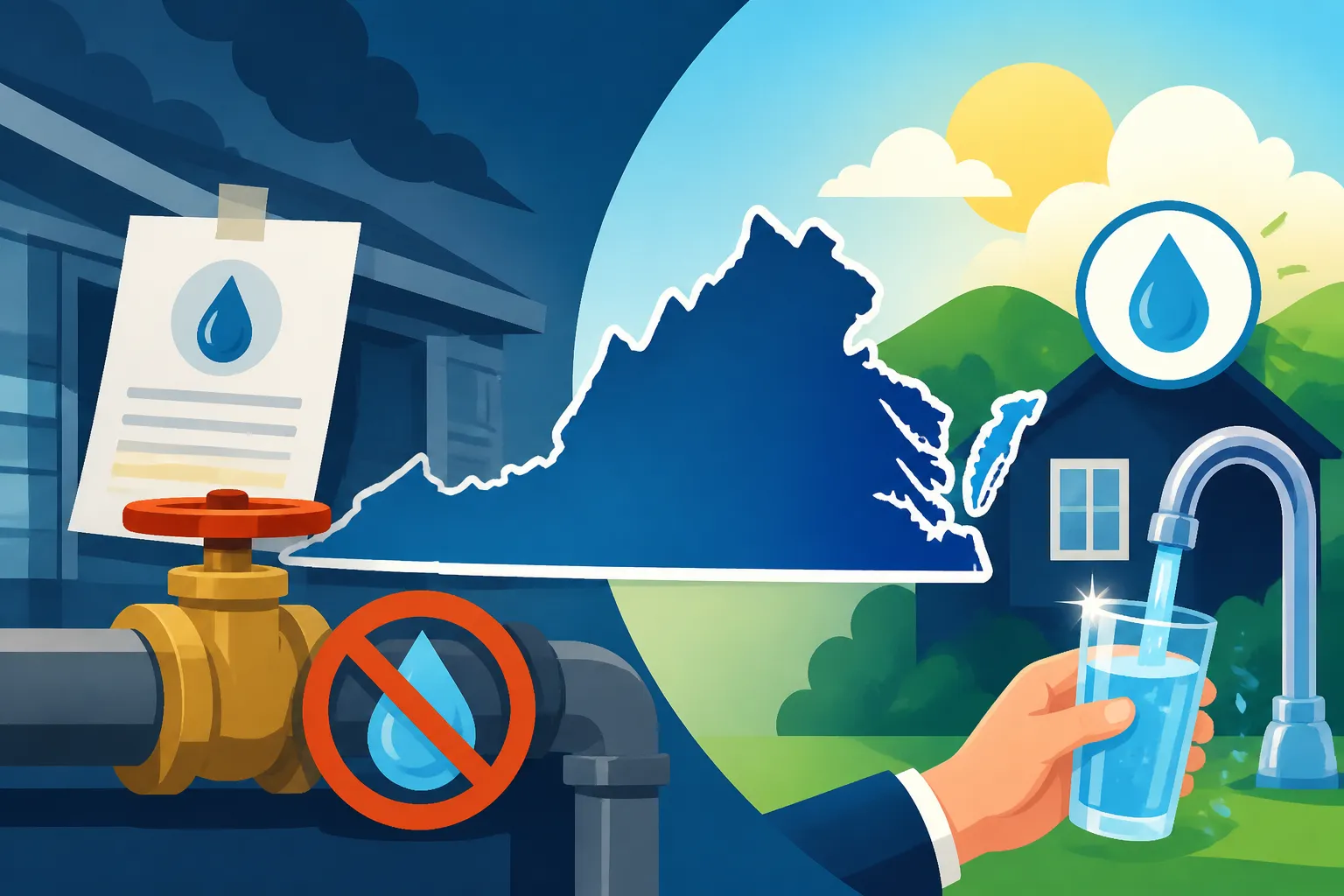
A water shutoff can be planned, caused by an emergency, or tied to a past-due bill—and the next step depends on which it is. Virginia customers need to know who controls the service, what notices to look for, how to ask about payment options, and what to confirm before water is turned back on.
What a Water Shutoff Means in Virginia
A water shutoff is a deliberate interruption of service to a home or building. It is different from low pressure, a broken water main, a neighborhood outage, or a problem with a home’s plumbing. The cause matters: the utility may need to repair a leak, respond to a safety concern, or address a past-due account, while a property owner or plumbing contractor may control work inside a building.
The first question is who provides the water. In Virginia, a home may receive water from a city or county, a regional authority, a privately owned utility, or another waterworks. A landlord or property manager may handle billing for an apartment or shared meter. The water provider is not always the same organization that sends the household a bill. For an overview, see Where Virginia Tap Water Comes From and Who Is Responsible for It.
A utility’s shutoff authority, notice process, payment rules, and reconnection steps can differ from one service area to another. Local ordinances, utility policies, and the terms of a customer’s account may all matter. Do not assume that a friend’s experience in another Virginia locality applies to your address.
| Situation | Who may be responsible | Useful first step |
|---|---|---|
| A notice says service will stop for a past-due balance | The account holder and the water provider | Confirm the balance, deadline, and options with the provider |
| Several homes have no water or low pressure | The utility may be responding to a system problem | Check official utility notices and report the issue |
| Only one home has no water | The utility, building owner, or a plumbing problem may be involved | Check with neighbors, then contact the provider or property manager |
| An apartment has a shared meter | The landlord, property manager, or account holder may receive notices | Ask management who holds the utility account and what action is underway |
| Water is off during plumbing or construction work | A plumber, building owner, or utility may have arranged it | Ask who authorized the shutoff and when service is expected back |
| The utility has stopped service after a leak or safety concern | The provider and property owner may both have tasks to complete | Ask what repair, inspection, or approval is required before restoration |
A shutoff may affect the water entering the property without stopping sewer service or other utility services. The bill and account arrangement determine which charges continue, so ask the provider or property manager rather than assuming all services are suspended together.
If you are unsure which organization serves your address, check a recent bill, lease, closing paperwork, or official utility website. The account number and service address help the provider identify the correct account. A neighbor’s bill may not identify your supplier, particularly where nearby homes use different systems.
Why Service May Be Shut Off
Nonpayment or an account problem
A past-due balance is one possible reason for a shutoff notice, but it is not the only one. The amount could include more than current water use, and a billing dispute, returned payment, account transfer, or missing payment posting may complicate the record. Review the bill and account history before treating the stated balance as settled.
A water bill can include water use, sewer charges, fixed charges, adjustments, and other items. The utility may have rules about which charges can lead to disconnection. If the amount looks wrong, ask for an itemized explanation and the date of the last meter reading. Virginia Water Bills: Charges, Disputes and Help When You Fall Behind explains common bill components, while Reading a Virginia Water Bill: Usage, Charges, Due Dates and Messages can help identify account messages and dates.
A past-due balance does not automatically mean service will stop immediately. The provider’s process may include notices and a deadline, but the details vary. The most useful source is the notice for your account and the current policy on the provider’s official website.
Repairs, leaks, or system emergencies
Utilities sometimes interrupt service to repair a water main, replace equipment, isolate a leak, or address another operational issue. The utility may schedule work in advance, but an urgent break or equipment failure can require a faster response. In those cases, a customer may learn about the outage through a website update, local alert, door notice, or other communication channel.
A private-side leak can also lead to an interruption. The utility may shut off service at the meter or curb stop if water is escaping, if the connection is unsafe, or if a repair requires the supply to be isolated. A plumber may shut off the building’s main valve for work inside the property. Ask which valve or service point was closed and who is authorized to reopen it; do not assume the utility’s valve and the building’s valve are the same.
If only your home is affected, a building valve, pressure-reducing device, frozen or damaged pipe, or other plumbing issue could be involved. For help distinguishing a utility issue from a household problem, see Low Pressure at the Faucet: Utility Problem or Your Own Plumbing?. If the interruption followed a main break or hydrant flushing, What to Check at Home After a Water Main Break or Hydrant Flushing covers practical checks once service returns.
Safety, access, or service changes
A provider may need to stop service because it cannot safely access equipment, because a meter or connection needs attention, or because an account is being changed. The exact reasons and process depend on the provider and the circumstances. Ask for the reason in writing if it is not clear from the notice.
A shutoff can also occur when a property changes hands, a tenant moves, or an owner requests that an account be closed. If you are moving in, confirm that service is active in your name or that the building’s shared account remains active. If you are moving out, ask how to close or transfer the account and how the final bill will be handled.
Notices, Timing, and How to Verify Them
A notice can arrive by mail, email, text, an account portal, a bill insert, or a door posting. Some providers may use more than one channel. Make sure the provider has current contact details for the account holder, and check the account portal if available. For a shared-meter apartment, notices may go to the landlord or property manager rather than each resident.
A shutoff notice should make it possible to identify the account and understand the action being proposed. Look for the service address, the reason for the notice, the amount or action required, the date or deadline, and instructions for contacting the provider. If something is missing or unclear, contact the utility using contact information found independently on its official website or on a verified bill.
Be cautious with unexpected messages asking for immediate payment through a link, gift card, payment app, or unusual method. A real account issue should be verifiable through the provider’s official account system or customer service channel. Do not use a phone number or link from a suspicious message until you have confirmed it independently.
What to do when a deadline is close
Do not wait until the stated date to ask questions. The provider may need time to review a payment, correction, or arrangement request, and a payment submitted through a third party may not appear on the account right away.
When you contact the provider, write down:
- The account and service address.
- The amount the notice says is due and any disputed part.
- The notice date and stated shutoff date.
- The dates and amounts of recent payments.
- Any confirmation number or receipt.
- The name or department of the person who handled the inquiry, if provided.
- What action the provider says will prevent shutoff or restore service.
Ask directly whether a payment or arrangement will pause the scheduled action, and when the account will show the change. Do not rely on a general statement such as “the payment is processing” if a shutoff date is near. Request confirmation through the account portal, email, or another available written channel.
There is no single timeline that applies to every Virginia water provider and every kind of interruption. Emergency repairs differ from nonpayment procedures, and the notice rules may vary by provider and customer type. For a general discussion of account timing, see How Far Behind Can a Virginia Water Bill Get Before Shutoff?. Confirm the current deadline and process with the provider that serves the address.
If you did not receive a notice
A missing notice does not prove that a shutoff is improper or that service cannot be interrupted. The notice may have gone to the account holder, an old mailing address, a landlord, or an email account that is no longer checked. It may also have been posted at the property or sent through a channel the customer overlooked.
Ask the provider when and how it sent the notice, which address or contact information it used, and whether a copy can be provided. If the service is already off, ask for the reason and the steps required to restore it. Keep copies of notices and payment records, especially if you are disputing whether a message reached the account holder.
If the provider says the account is current, share proof of payment and ask whether the payment was applied to the correct account. If the amount is disputed, ask what portion is considered overdue and whether the provider has a review process. A dispute does not necessarily pause a shutoff, so ask that question explicitly.
If a Shutoff Is Planned for a Past-Due Bill
A notice is a prompt to act, not a reason to wait for the service to stop. Start by checking the balance and confirming that the notice is genuine. Then contact the water provider through an official channel and ask what options are available before the stated deadline.
Confirm the account and amount
Compare the notice with your bill and payment records. Check that the service address and account number match. Look for a recent payment that may not have posted, a meter estimate, an adjustment, a leak-related increase, or a charge you do not recognize. If the balance appears to be a billing error, request a review and ask what happens to the shutoff date while that review is underway.
An account may be past due even if a payment was sent, if it was applied to a different account or has not cleared. Give the provider the payment date, amount, and confirmation information. If you paid through a third-party service, keep its receipt and confirm whether the provider has received the funds.
If you believe high use came from a leak, ask about the provider’s leak adjustment or review policy. Such programs are not uniform, and a request may require documentation or a completed repair. Do not assume that the bill will be reduced automatically.
Ask about payment options
The provider may offer a payment arrangement, an extension, a review of the account, or information about local assistance. Availability and eligibility can vary. Ask what options apply to your account, what amount is needed to keep service active, when each payment must be made, and whether the agreement will prevent a scheduled shutoff.
Do not agree to a payment plan until you understand the dates, amount, and consequences of missing a payment. Ask whether the provider will accept a partial payment, whether an existing arrangement can be changed, and whether a new account holder can take over service. Get the terms in writing if possible. Payment Plans for a Past-Due Water Bill: Questions to Ask Your Utility offers a checklist for that conversation.
If you cannot pay the full amount, say so clearly and ask about assistance programs or referrals. A community organization may help with a bill, but its funding, eligibility rules, and timing can differ. Confirm whether any assistance payment reaches the utility before the shutoff date; applying for help may not by itself stop disconnection.
If you are disputing the bill
Explain which charge or reading you question and why. Ask for the meter reading history, the type of reading used, and an explanation of any adjustments. If the issue is a high bill, check for a running toilet, irrigation leak, softener discharge, outdoor hose leak, or other source of unexpected use. A meter test or account review may be available under the provider’s procedures.
Pay attention to the difference between a bill dispute and a request to stop shutoff. Ask whether the review process automatically delays disconnection or whether a separate payment, arrangement, or appeal is needed. Keep a dated record of your communications. If the provider denies the review, ask what further complaint or appeal route is available and where to find its current rules.
Renters, Landlords, and Shared Water Accounts
In a rental, the person who uses the water may not be the person named on the utility account. The building owner may have a master meter, or each unit may have a separate meter and account. A renter should find out which setup applies before interpreting a notice or paying a balance.
Start with the lease, move-in paperwork, and any utility instructions from the property manager. Ask who is responsible for the account, which services are included in rent, and how residents are notified about planned interruptions. If you receive a shutoff notice addressed to someone else, do not ignore it; promptly tell the landlord or manager and confirm whether the building has an active account.
If water is shut off in a building, document the date and which units are affected. Ask management what caused the outage, whether the provider is involved, and when service is expected to return. If management says the utility is responsible, verify that through the provider. If a utility account is in a landlord’s name, the provider may be limited in what account details it can share with a tenant, but it may still be able to confirm a general outage or service status.
The legal duties of a landlord and the account holder can depend on the lease, the facts, and applicable law. Do not assume that a landlord may or may not shut off water in every situation. For that issue, see Does Virginia Law Let a Landlord Shut Off a Tenant’s Water?. If the interruption is prolonged or affects habitability, seek guidance from a qualified local housing or legal resource.
A renter should not pay a landlord’s or former tenant’s balance directly to the utility unless the provider confirms how the payment will be applied and the arrangement is understood. Get any promise about service restoration in writing. If you are taking over a utility account, ask the provider what documents it needs and whether a prior occupant’s balance can affect the new account.
For shared meters, a single account problem may affect several households. Residents can coordinate with the property manager to identify the account holder, obtain copies of notices, and share information about the outage. If the building has separate accounts, one unit’s balance may not explain a neighboring unit’s loss of service.
Getting Water Service Restored
The steps depend on why service stopped. A shutoff for nonpayment may require payment or an approved arrangement; a repair-related interruption may require the leak to be fixed; and an emergency may require the utility to complete system work before service can resume.
Ask what must happen before reconnection
Contact the provider or property manager and ask for a precise list of outstanding requirements. Useful questions include:
- Is the account eligible for restoration now?
- Must a payment, arrangement, or account change be completed first?
- Is there a reconnection or service visit charge, and how is it calculated?
- Does the utility need access to the meter?
- Must a leak or plumbing repair be completed before service is reopened?
- Does the utility need proof of repair or an inspection?
- Will the provider restore service automatically, or must the customer request it?
- When should water be available, and what should be done if it is not?
Fees and policies vary, so confirm current figures and payment methods directly with the provider. Ask whether the payment must post before the utility schedules the work. If an account is in a landlord’s name, the account holder may need to make the request.
Use a receipt or confirmation number to track a payment or restoration request. If the provider gives a restoration window, ask what to do if the window passes without service. A service crew may need access to the meter or property; arrange access only through the provider’s official process.
Avoid operating utility equipment yourself
Do not try to reopen a utility-controlled valve, break a lock, remove a meter, or bypass a shutoff. The equipment may be damaged, and the provider may require its own staff or an authorized contractor to restore service. If you can safely reach a household shutoff valve inside the building, that is different from a utility valve, but ask a plumber or property manager if you are unsure.
If a leak caused the shutoff, do not ask for water to be restored until the leak is controlled. A small leak can become a major property loss once pressure returns. Have a qualified plumber inspect and repair the problem when needed, and keep the invoice or other records if the provider requests evidence.
After water comes back
When service returns, check for leaks at visible fixtures and appliances. Open a cold-water tap slowly and watch for unusual sputtering or discoloration. If water looks discolored after utility work, follow the provider’s current instructions; flushing may be recommended in some situations, but it is not a substitute for a utility notice or a professional assessment.
If the provider issued a boil-water advisory or another safety notice, follow it until the official notice says it has ended. A shutoff or repair does not automatically mean a boil-water advisory is in effect, and restored pressure does not necessarily mean an advisory has ended. Check When the Utility Says Boil: A Virginia Household’s Guide to Advisories for what to do when an advisory is issued, and use the utility’s official notices for the current status.
After an advisory ends, follow any instructions the provider gives for household plumbing, filters, or ice makers. Do not assume a pitcher filter or home treatment system allows you to ignore an official advisory. The provider’s instructions apply to the affected service area and the specific event.
When You Have No Water and No Clear Notice
First determine whether the problem is limited to your property or affects the neighborhood. Check with a neighbor, building manager, or nearby business if appropriate. Then check the provider’s official outage notices and contact the provider to report the service loss. If you live in an apartment, tell management as well; the problem may be in the building’s plumbing rather than the public system.
If nearby properties have water but your home does not, check whether the building’s main valve is closed and whether a recent repair or account change occurred. Avoid repeatedly turning valves if you cannot identify them. A plumbing contractor can help determine whether the issue is on the customer’s side of the meter.
If several homes are affected, report the issue even if the utility has posted an outage notice. The provider may need reports to understand the extent of the problem. Ask whether the outage is planned or emergency work, which streets or buildings are affected, and where updates will appear. Do not treat a neighbor’s estimate of restoration time as an official commitment.
If you need water for essential household needs while service is unavailable, make a short-term plan. Ask the provider whether it has arranged an alternative supply or identified a distribution point. Use only information from the utility or local emergency communications about where water is available and how it should be used. If anyone in the household has a specific medical need, consult a medical professional about safe alternatives.
Keep receipts for reasonable expenses related to an outage, but do not assume that the provider will reimburse them. Ask about the provider’s complaint or claims process and what documentation it requires. If the outage is part of a larger emergency, follow directions from local emergency officials and use the official utility website for current contact details and updates.
Preparing for Future Interruptions
A little preparation can make a planned repair or unexpected outage easier to manage. Keep the water provider’s official website and account information accessible. Update the account holder’s mailing address, email, and phone number, and ask whether the provider offers outage alerts. If you rent, ask how the owner or manager will pass along notices.
Keep recent bills and payment confirmations. If a shutoff notice arrives, having the account number and payment history ready can shorten the call. If a household member manages bills for someone else, make sure the account holder has authorized access where the provider requires it.
Know where the building’s indoor main shutoff valve is, and label it if appropriate. This can help limit damage if a pipe leaks, but it does not replace knowing which equipment belongs to the utility. Ask a plumber or property manager to identify the household valve if you are uncertain.
For a planned utility interruption, follow the provider’s instructions about storing water or preparing appliances. Avoid relying on old instructions from a different outage, because repair conditions and safety guidance can differ. If the utility advises customers to conserve water or avoid using it for a particular purpose, follow the notice and check for updates.
For financial preparation, contact the provider early if a bill is becoming difficult to pay. Ask about due dates, budget options, payment arrangements, and local assistance before the account reaches the stage of a shutoff notice. The provider can explain its own current procedures; assistance organizations can explain their own eligibility and application requirements.
Frequently Asked Questions
Can a Virginia water utility shut off service for nonpayment?
A provider may have a process for discontinuing service over an unpaid account, but notice, timing, and available options vary. Check the notice and the current policy of the provider serving your address. Ask what steps can prevent the scheduled shutoff.
How much notice does a Virginia utility have to give?
There is not one timeline to assume for every provider and every kind of interruption. Emergency work and account-related shutoffs are different situations. Confirm the date and notice process with the utility, and check the rules that apply to your account.
What should I do if I paid but received a shutoff notice?
Contact the provider promptly using an official channel. Share the payment date, amount, and confirmation number, and ask whether the payment posted to the correct account. Confirm whether the scheduled shutoff is paused while the payment is reviewed.
Does every water shutoff mean I need to boil water?
No. A shutoff by itself does not tell you whether a boil-water advisory has been issued. Check official utility notices and follow any advisory that applies to your address. Do not assume an advisory has ended until the responsible utility or agency announces that it has.
Who should a renter contact if the building has no water?
Contact the landlord or property manager and check whether the utility has reported an outage. If the account is in the renter’s name, contact the provider directly as well. Ask who holds the account, what caused the interruption, and what must happen before service returns.
Disclaimer
This article is for general informational purposes only and does not constitute professional advice. Laws, prices and regulations vary by location and change over time. Consult a qualified professional for guidance on your specific situation. Virginia Water Guide is not a government agency or water utility and is not affiliated with any public water system.